




Published: October 26, 2025
Author: Fiffco Global Engineering Team
Website: Fiffco Global
Table of Contents
- Introduction: The Firefighting Challenge
- What Is a Vertical Turbine Pump?
- Why Vertical Turbine Pumps Excel in Firefighting
- Real-World Applications & Case Studies
- Key Components & How They Work
- Compliance & Safety Standards
- Comparison with Other Fire Pump Types
- FAQs About Vertical Turbine Fire Pumps
- Expert Recommendations for Installation
- Conclusion & Next Steps
1. Introduction: The Firefighting Challenge
When seconds count, water delivery must be fast, reliable, and powerful. In high-risk environments—industrial plants, offshore platforms, high-rise buildings—fire protection systems must perform flawlessly. But what happens when water sources are deep underground or municipal pressure fails?
That’s where vertical turbine pumps (VTPs) shine. This guide explores why VTPs are the gold standard for firefighting applications, how they work, and how to choose the right one for your facility.
2. What Is a Vertical Turbine Pump?
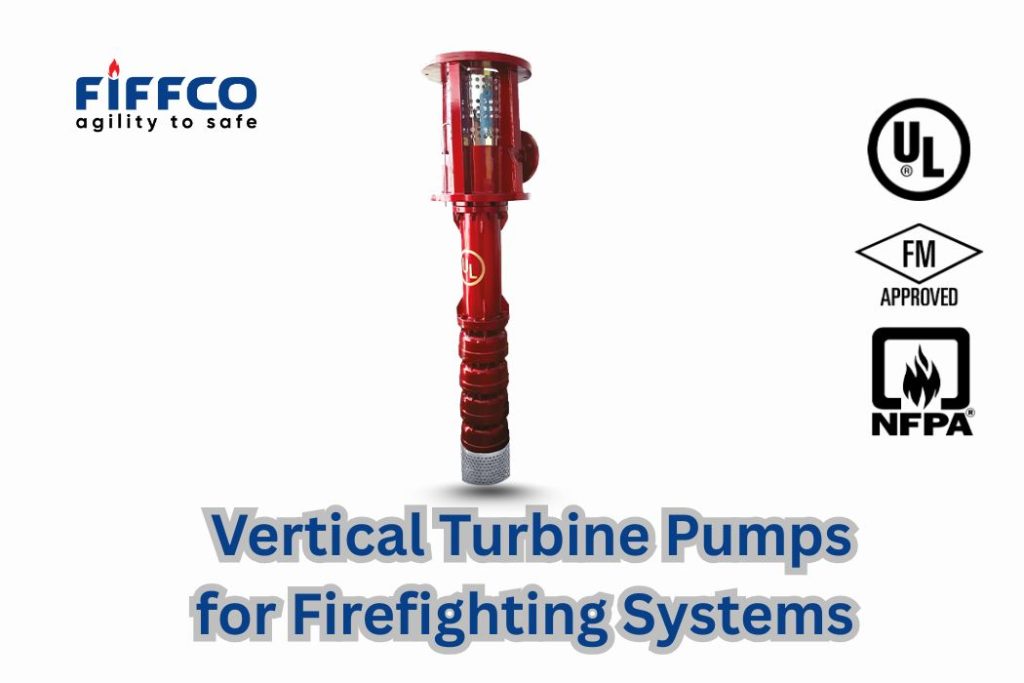
A vertical turbine pump is a type of centrifugal pump designed to lift water from deep sources like wells, reservoirs, or tanks. Unlike horizontal pumps, VTPs are installed vertically, allowing them to draw water from depths of over 100 feet.
Key features include:
- Multistage impellers for high pressure
- Line shaft or submersible motor options
- Customizable column lengths
- Compact footprint for tight installations
3. Why Vertical Turbine Pumps Excel in Firefighting
Here’s why VTPs are ideal for fire protection:
- Uninterrupted Water Supply: VTPs draw water directly from deep sources, ensuring availability even when surface pressure drops
- High Flow & Pressure: Capable of delivering 250 to 5000 GPM and pressures up to 519+ PSI, meeting NFPA 20 standards
- UL Listed & FM Approved: Most models meet rigorous safety certifications, making them compliant with global fire codes
- Versatile Power Options: Operate via electric motors or diesel engines—critical for backup during power outages.
- Durability in Harsh Conditions: Ideal for offshore rigs, remote facilities, and industrial zones with corrosive environments.
4. Real-World Applications & Case Studies
Case Study: Offshore Oil Platform, North Sea
Fiffco Global installed a VTP system capable of 4000 GPM at 450 PSI. The pump’s deep-set design ensured reliable water delivery from a submerged tank even during storm-induced power failures.
Other common applications:
- High-rise buildings
- Airports and power stations
- Warehouses and manufacturing plants
- Municipal water systems
5. Key Components & How They Work
Understanding the anatomy of a VTP:
- Pump Bowl Assembly: Located at the bottom, houses impellers and diffusers.
- Column Pipe: Connects the bowl to the discharge head, housing the shaft.
- Line Shaft Bearings: Support the rotating shaft, reducing wear.
- Discharge Head: Transfers water to the system and supports the motor.
Working Principle:
Water enters through the pump bowl, is pressurized by impellers, and travels up the column to the discharge head. The motor—either above ground or submersible—drives the shaft.
6. Compliance & Safety Standards
Vertical turbine fire pumps must meet:
- NFPA 20: Standard for the installation of stationary fire pumps
- UL 448: Safety standard for centrifugal fire pumps
- FM Approval: Ensures reliability under fire conditions
Tip: Always verify certifications before purchase to ensure insurance and legal compliance.
7. Comparison with Other Fire Pump Types
| Feature | Vertical Turbine Pump | Horizontal Split Case | End Suction |
| Water Source | Deep wells/reservoirs | Surface tanks | Surface tanks |
| Flow Rate | Up to 5000 GPM | Up to 5000 GPM | Up to 1500 GPM |
| Footprint | Compact | Large | Small |
| Maintenance | Moderate | Easy | Easy |
| Ideal Use | Remote/deep water | Large facilities | Small buildings |
Sources: Ruhrpumpen , HYVTP Pumps
8. FAQs About Vertical Turbine Fire Pumps
Q: Can VTPs run without electricity?
Yes. Diesel-driven models are available for backup power scenarios.
Q: What’s the typical lifespan?
With proper maintenance, VTPs can last 20+ years.
Q: Are they noisy?
Noise levels depend on motor type and installation. Enclosures can mitigate sound.
9. Expert Recommendations for Installation
Fiffco Global’s engineering team recommends:
- Site Assessment: Evaluate water source depth, flow requirements, and space constraints.
- Redundancy Planning: Consider dual-pump systems for critical infrastructure.
- Routine Testing: Monthly flow tests ensure readiness.
- Corrosion Protection: Use stainless steel or epoxy coatings in harsh environments.
10. Conclusion & Next Steps
Vertical turbine pumps are unmatched in reliability, pressure, and adaptability for firefighting systems. Whether you’re protecting a high-rise or an offshore facility, VTPs offer peace of mind when it matters most.
Ready to upgrade your fire protection system?
👉 Contact Fiffco Global for expert consultation and custom solutions.
Author Bio
Fiffco Global Engineering Team
With over 25 years of experience in industrial pump systems, Fiffco Global specializes in fire protection solutions across Europe and Asia. Our engineers are certified in NFPA standards and have deployed over 300 vertical turbine systems globally.
Disclosure
This article is for informational purposes only. Fiffco Global may offer products mentioned herein. No affiliate links are included.
Sources:
Ruhrpumpen Vertical Turbine Fire Pump
HYVTP Pumps: Vertical Turbine Fire Pump Explained
Purity Fire: Understanding Vertical Turbine Pumps