


Published: April 2026 | Last Updated: April 2026 Author: Fiffco Global Technical Team | Reviewed by: Fire Safety Engineering Specialist
Introduction
Imagine walking into your facility on a Monday morning only to find that a minor electrical fault in a server room—left unchecked because of an outdated safety audit—has compromised your entire operation. According to the UK Health & Safety Executive, fire incidents in commercial properties often stem from overlooked hazards that a robust assessment would have identified. In 2026, the margin for error is non-existent. With evolving regulations and smarter building technologies, staying compliant isn’t just about avoiding fines; it’s about absolute business continuity.
As a facilities manager or building owner, you are likely feeling the pressure of the Fire Safety (England) Regulations and the Building Safety Act. The landscape of fire safety has shifted from a “check-the-box” exercise to a dynamic, ongoing process of risk management. If you haven’t updated your assessment strategy recently, you may be operating under a false sense of security that puts lives and your professional reputation at risk.
This Fire Risk Assessment UK 2026 Guide is designed to cut through the legislative jargon. We have distilled decades of engineering experience into a practical roadmap that helps you identify vulnerabilities before they become tragedies. Whether you manage a small office or a complex industrial site, the principles laid out here will ensure you meet the highest safety standards.
By the end of this guide, you will understand the technical requirements of a modern assessment, the critical equipment needed for mitigation, and how to maintain a gold standard of life safety. We aren’t just talking about theory; we are looking at the practical application of fire science in the modern UK landscape.
What Is a Fire Risk Assessment?
A Fire Risk Assessment (FRA) is a systematic evaluation of a premises to identify potential fire hazards, determine the risk to people in the building, and implement measures to eliminate or reduce those risks. Under the Regulatory Reform (Fire Safety) Order 2005, it is a legal requirement for virtually all non-domestic premises in the UK.
Technically, an FRA involves a deep dive into three core areas: ignition sources (heat, sparks, or flame), fuel sources (anything that can burn), and oxygen sources (natural or mechanical ventilation). The assessor must evaluate how these three elements—often referred to as the “fire triangle”—interact within your specific building layout.
In 2026, this overview extends beyond just looking at piles of paper. It involves checking the integrity of fire doors, the efficacy of fire alarm notification systems, and the suitability of suppression methods. It is used in every sector, from high-rise residential blocks to petrochemical plants, ensuring that if a fire does occur, it is detected early, contained effectively, and that everyone can escape safely.
The stakes are incredibly high. For property owners, a failed FRA can lead to “Prohibition Notices,” which effectively shut down your building until rectified. For life safety, it is the difference between an orderly evacuation and a catastrophic event.
The Five Steps of a Fire Risk Assessment
To make the process manageable, we break the Fire Risk Assessment UK 2026 Guide into five distinct H3 subheadings, following the standard industry framework.
1. Identify
Fire Hazards The first step is a thorough walkthrough to spot anything that could start a fire or help one spread. Look for overloaded sockets, poorly maintained machinery, or combustible waste stored near external walls. Pro Tip: Use thermal imaging cameras to detect “hot spots” in electrical panels that are invisible to the naked eye.
2. Identify People at Risk
Every person in the building is at risk, but some are more vulnerable than others. This includes night-shift workers, visitors who don’t know the layout, and individuals with disabilities. A real-world example would be a hotel where guests may be asleep and disoriented; here, the assessment must prioritise loud, clear notification and intuitive escape lighting.
3. Evaluate, Remove, and Reduce Risks
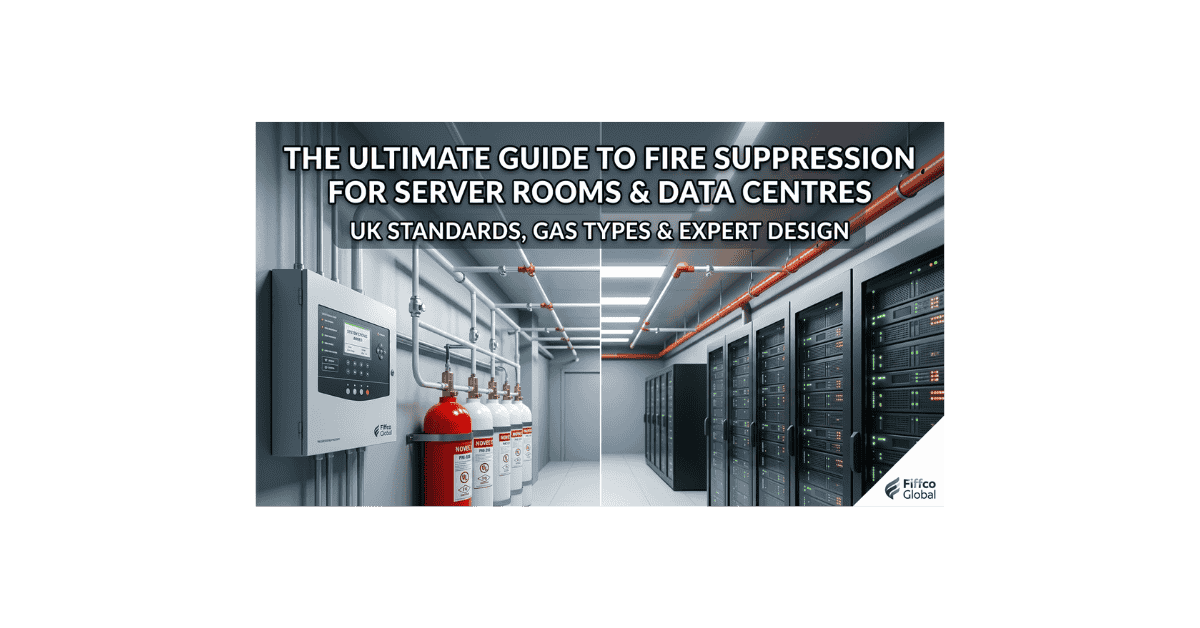
Once you know the hazards, you must act. This means moving flammable liquids to a dedicated gas suppression protected area or installing fire protection valves to control water flow in your sprinkler system. Evaluation also involves deciding if your existing protection is sufficient for the “fire load” of the room.
4. Record, Plan, and Train
If you have five or more employees, you must record your findings. This document should include a clear emergency plan. Training is vital; there is no point in having the best equipment if your staff don’t know how to use it. Regular fire drills are the only way to ensure the plan works under pressure.
5. Review and Update Regularly
An FRA is not a static document. It must be reviewed if there are changes to the building layout, a change in the type of work being done, or after a “near miss” incident. In 2026, we recommend a formal review at least once every 12 months for standard buildings, and more frequently for high-risk environments.
Relevant Standards & Compliance (UK & International)
Navigating the regulatory waters requires an understanding of both local and international benchmarks. In the UK, the British Standards Institution (BSI) provides the primary framework, specifically BS 9999 for fire safety in the design, management, and use of buildings.
However, since Fiffco Global operates on a world stage, we also look toward the National Fire Protection Association (NFPA) standards. For example, NFPA 101 (Life Safety Code) is often the go-to for international contractors working on large-scale industrial projects. Compliance is not just a legal hurdle; it is a mark of quality that insurers and stakeholders demand.
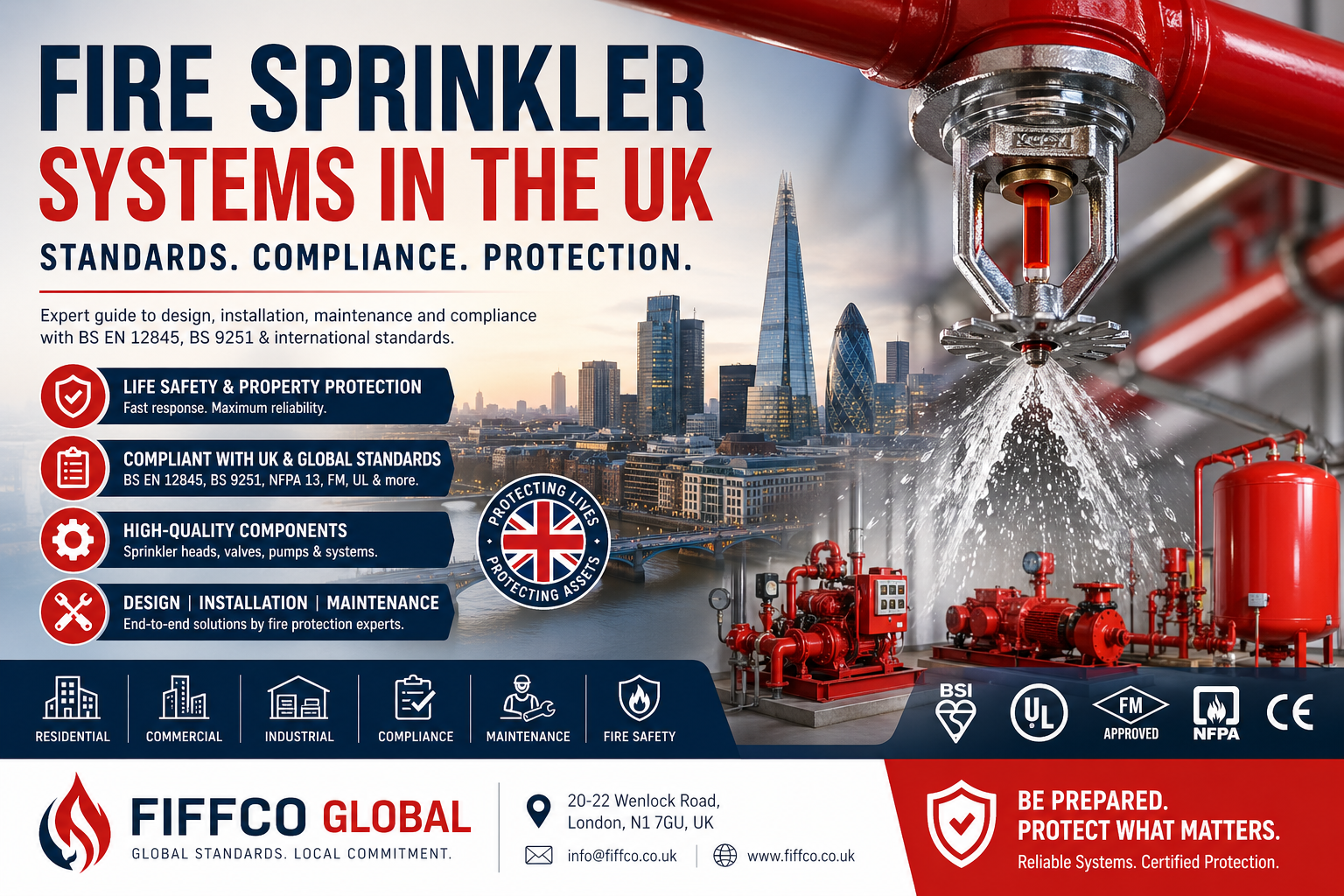
When selecting hardware to meet these standards, you must look for UL (Underwriters Laboratories) and FM (Factory Mutual) Approvals. These certifications prove that the equipment has been tested under extreme conditions. For instance, Fiffco Global supplies sprinkler systems that comply with international standards — explore our sprinkler systems range here: [https://fiffco.co.uk/sprinkler-systems].
Working with VdS Global or CE-marked products ensures that your hardware won’t fail when it’s needed most. For safety engineers, using certified equipment simplifies the FRA process because the reliability of the “active” fire protection is already verified.
How to Conduct a Fire Risk Assessment in 2026: A Step-by-Step Guide
- Appoint a “Competent Person”: Ensure the individual conducting the assessment has the necessary training and experience. If the building is complex, hire a professional fire engineer.
- Review Building Plans: Look at the “passive” fire protection, such as fire-rated walls and floors, to ensure they haven’t been compromised by new cabling or renovations.
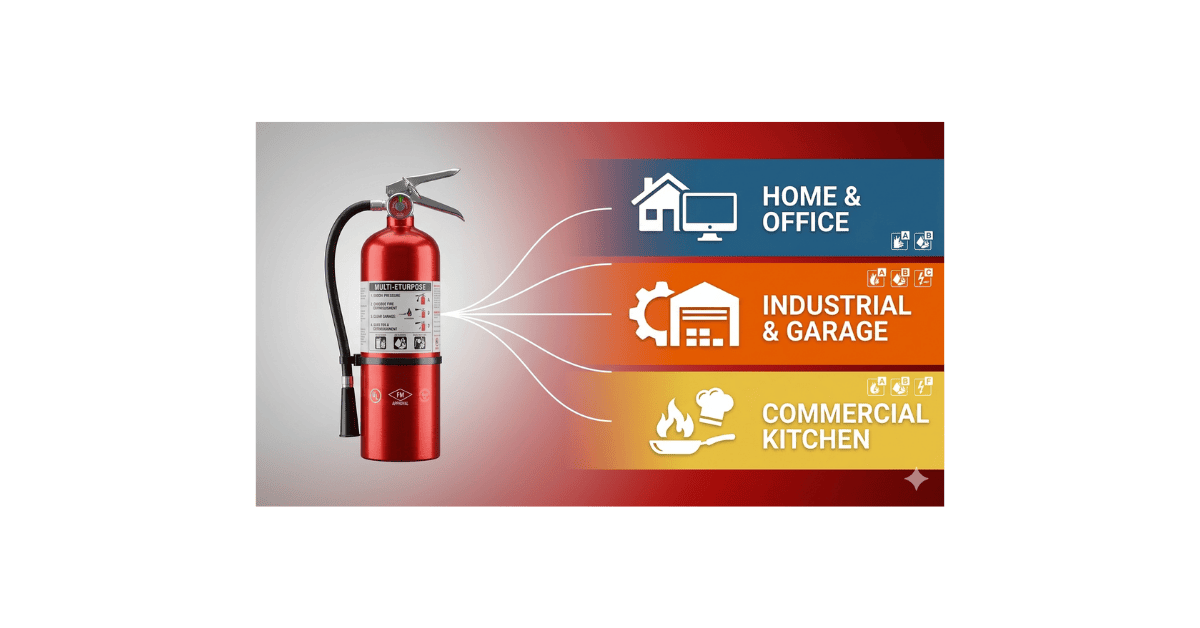
- Inspect Fire Fighting Equipment: Verify that all fire extinguishers are serviced and the correct type for the room (e.g., CO2 for electrical, Foam for solids).
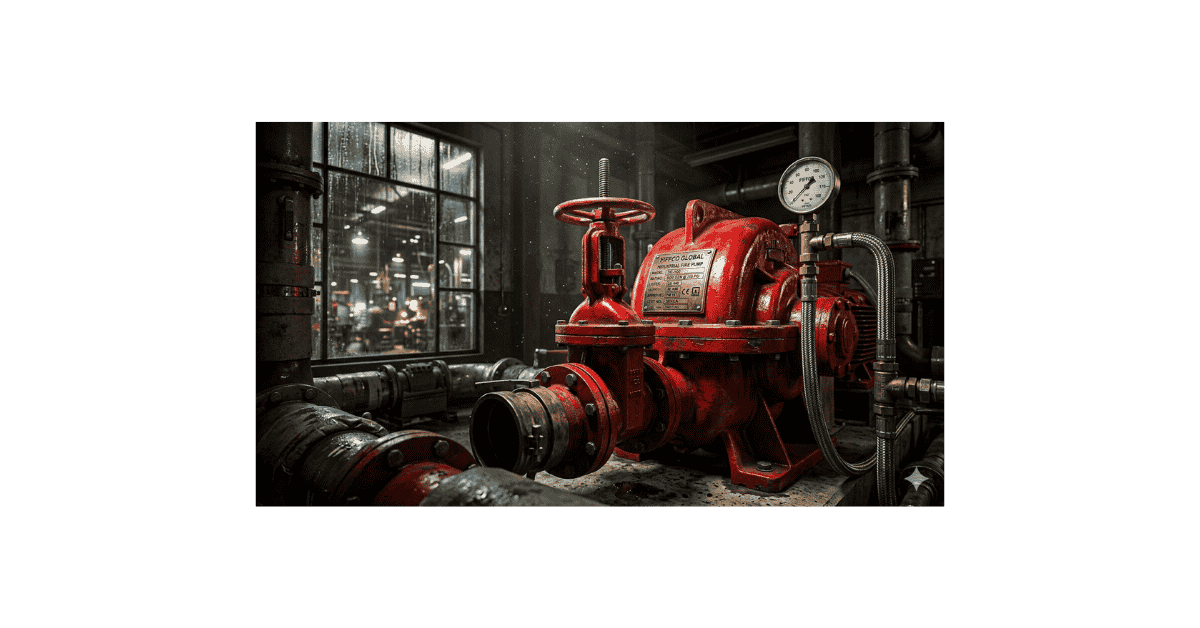
- Test Active Systems: Ensure that fire pumps provide the required pressure and that the alarm system is audible in all areas, including plant rooms.
- Check Escape Routes: Walk every exit path. Ensure they are free of obstructions and that fire doors latch correctly without gaps. DO: Check that emergency lighting stays on for its full rated duration during a discharge test.
- Document and Action: Create a prioritised list of remedial actions. High-risk items must be addressed immediately. DON’T: Ignore “minor” issues like a propped-open fire door; these are the primary causes of smoke inhalation fatalities.
Common Mistakes & How to Avoid Them
One of the most frequent errors we see at Fiffco Global is the “Copy-Paste” Assessment. This happens when a manager takes a generic template and fails to tailor it to their specific site. A warehouse storing electronics has vastly different risks than one storing timber. To fix this, always start with a blank floor plan and map your specific hazards.
Another major pitfall is Neglecting Passive Protection. People often focus on the “flashy” tech like alarms but ignore the holes drilled in fire walls for new internet cables. These gaps allow smoke to bypass fire doors. Ensure your FRA includes a “compartmentation survey” to maintain the building’s integrity.
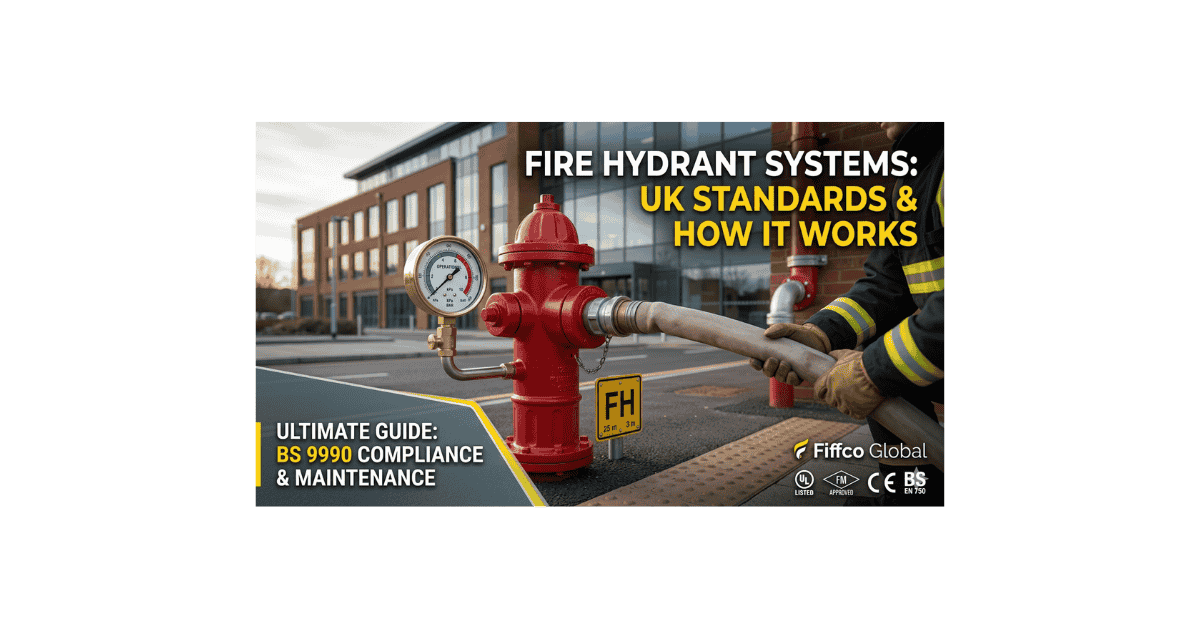
Thirdly, Poor Maintenance Records can be a legal nightmare. Even if your equipment is perfect, if you cannot prove it was tested, you are non-compliant. Use digital logging systems to track every inspection of your fire hydrants and valves.
Finally, many fail to account for Change of Use. If you turn a storage cupboard into a server room, the fire risk changes instantly. You must update your FRA immediately whenever a room’s function shifts.
Real-World Applications: High-Rise and Industrial Scenarios
Scenario 1: The Modern High-Rise Office
In a London-based commercial skyscraper, the primary challenge is the “stay put” vs. “simultaneous evacuation” strategy. A 2026 FRA for this environment must focus heavily on smoke control and lift safety. We recently advised on a project where the assessment identified that the stairwell pressurisation systems were underperforming. By upgrading to high-efficiency HVAC equipment, the facility was able to guarantee a smoke-free escape route for thousands of occupants.
Scenario 2: The Chemical Processing Plant
For an industrial facility, the risk is not just fire, but explosive potential. Here, the FRA must align with DSEAR (Dangerous Substances and Explosive Atmospheres Regulations). In this scenario, standard water sprinklers might be insufficient or even dangerous. The assessment would likely recommend a foam suppression system designed to smother chemical fires quickly, combined with explosion-proof notification hardware.
Frequently Asked Questions (FAQ)
How often should a Fire Risk Assessment be updated in the UK?
While the law says “regularly,” industry best practice in 2026 dictates a full review every 12 months. However, you must update it immediately if there are significant changes to the building’s structure, occupancy, or purpose. High-risk sites like care homes or chemical plants should consider 6-month intervals.
Can I do my own Fire Risk Assessment?
The law requires a “competent person” to perform the task. If you have a small, low-risk premises (like a small shop), you may be able to do it yourself using government guides. For anything complex or multi-storey, you should employ a certified professional to ensure you don’t miss technical nuances that could lead to liability.
What happens if I don’t have a valid Fire Risk Assessment?
The consequences are severe. Local Fire and Rescue Authorities can issue enforcement notices, hefty fines, or even prison sentences for extreme negligence. Furthermore, if a fire occurs and you lack a valid FRA, your insurance provider will likely void your policy, leaving you personally liable for damages.
Does a new building need a Fire Risk Assessment?
Yes. While a new building will have been designed to modern fire codes, the FRA is about how the building is used. Once people, furniture, and equipment move in, the risks change. You should conduct your first FRA as soon as the building is occupied.
What is the difference between a Fire Risk Assessment and a Fire Safety Audit?
An FRA is a proactive document created by the building owner to manage safety. A Fire Safety Audit is typically an inspection carried out by the Fire and Rescue Service to check that you are complying with the law. Think of the FRA as your homework and the Audit as the final exam.
Why Choose Fiffco Global for Fire Safety Solutions?
Fiffco Global isn’t just a supplier; we are your partners in life safety. Based at 20-22 Wenlock Road, London, we have spent over a decade manufacturing and trading world-class fire fighting equipment. Our team understands that a Fire Risk Assessment is only as good as the hardware used to mitigate the identified risks.
We pride ourselves on our rigorous certification process. Our products carry UL, FM, and VdS marks, ensuring they meet the stringent demands of UK and international law. From massive industrial fire pumps to precision-engineered valves, we provide the tools that fire safety engineers trust to protect their most valuable assets.
Our global supply capability means we can support your projects whether they are in the heart of London or an offshore facility. We combine British engineering standards with a commitment to innovation, ensuring our clients stay ahead of the curve in an ever-changing regulatory environment.
Explore our full range of fire protection products at https://fiffco.co.uk/products or contact our team of specialists at info@fiffco.co.uk to discuss your building’s specific needs.
Conclusion
Completing a Fire Risk Assessment UK 2026 Guide compliant audit is a significant responsibility, but it is the cornerstone of professional property management. By identifying hazards, protecting vulnerable people, and choosing certified equipment, you create a resilient environment that can withstand the unexpected.
Remember, fire safety is not a “set and forget” task. It requires constant vigilance, regular maintenance of systems like fire pumps, and a culture of safety among your staff. The investment you make in a thorough assessment today pays dividends in the safety and security of your tomorrow.
If you have questions about which suppression systems or alarms are right for your specific risks, our team is ready to help. Reach out to Fiffco Global today, and let’s ensure your facility is a benchmark for safety in 2026 and beyond.