



By Fiffco Global Fire Safety Engineering Team
Updated: 27 November 2025
Table of Contents
- Introduction
- What Is a Fire Pump & Why Reliability Matters
- Most Common Fire Pump Problems (With Real Case Examples)
- How to Fix Each Fire Pump Problem (Step-by-Step)
- Early Warning Signs Your Fire Pump Is About to Fail
- Fire Pump Troubleshooting Checklist
- How Often Should a Fire Pump Be Inspected?
- Fire Pump Maintenance Best Practices (NFPA-20 Compliant)
- Frequently Asked Questions (FAQ)
- Final Thoughts & Recommended Next Steps
- Author Bio
1. Introduction
A fire pump is at the heart of every fire protection system. Whether it’s a commercial building, industrial facility, warehouse, or high-rise tower, fire pumps ensure adequate water pressure during fire emergencies.
But here’s the problem:
➡ Most fire pump failures occur not during operation—but during an emergency, when they’re needed most.
As fire safety engineers at Fiffco Global, we have inspected, installed, and maintained hundreds of fire pumps across various industries. Over the years, we’ve identified a common pattern:
More than 70% of fire pump failures are caused by predictable and preventable issues.
This guide will help you understand:
✔ The most common fire pump problems
✔ Why they happen
✔ How to fix them (step-by-step)
✔ How to identify issues early
✔ Best maintenance practices following NFPA-20, BS EN 12845, and global fire codes
By the end of this guide, you will know exactly how to keep your fire pump reliable, safe, and fully ready for emergency use.
2. What Is a Fire Pump & Why Reliability Matters
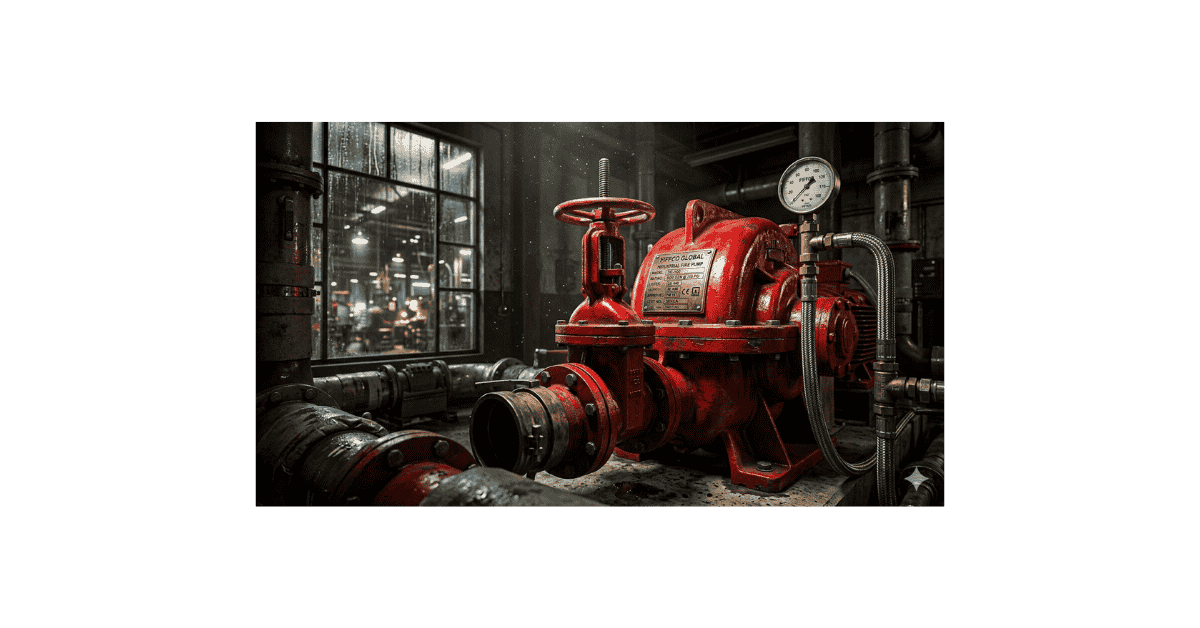
A fire pump boosts water flow and pressure in fire sprinkler and hydrant systems. It activates automatically when system pressure drops below a set level due to a fire event.
Types of Fire Pumps
- Diesel Fire Pump
- Electric Fire Pump
- Jockey Pump
- Vertical Turbine Pump
- End Suction / Split Case Pump
A failed fire pump means:
❌ No water pressure
❌ Sprinklers won’t operate properly
❌ Hydrants become ineffective
❌ Increased risk to life & property
That’s why proactive maintenance and early detection of issues are critical.
3. Most Common Fire Pump Problems (With Real Case Examples)
Below are the problems we see most often in commercial and industrial facilities.
Problem 1: Fire Pump Fails to Start
Cause:
- Dead battery (diesel pump)
- Faulty controller
- Low fuel
- Phase loss (electric pump)
- Pressure transducer failure
Example from field experience:
One industrial site had a diesel fire pump that wouldn’t start during a fire. The root cause?
➡ Battery charger was unplugged for 3 months.
Problem 2: Fire Pump Runs but No Pressure
Possible causes:
- Air leak in suction line
- Blocked foot valve
- Damaged impeller
- Insufficient water supply
Example:
At a garment factory, the pump was running but the pressure was stuck at 2 bar. The issue?
➡ Suction strainer was 90% clogged with debris.
Problem 3: Pump Starts Automatically Without Reason
Often called “ghost starts” or “false starts”.
Cause:
- Leaking check valve
- Jockey pump malfunction
- Pressure drop in system
- Pressure switch calibration error
Problem 4: Overheating
Cause:
- Misaligned pump and motor
- Bearing failure
- Poor ventilation in pump room
- Running without water (cavitation)
Problem 5: Excessive Noise & Vibration
Noise is usually the first sign of mechanical damage.
Cause:
- Worn bearings
- Loose coupling
- Cavitation
- Misalignment
- Air entrapped in suction line
Problem 6: Diesel Engine Fire Pump Problems
Most common issues include:
- Black smoke (rich fuel mix)
- White smoke (low compression or air in fuel system)
- Overheating
- Battery failure
- Fuel contamination
Problem 7: Controller Faults
The controller is the “brain” of the fire pump but often neglected.
Common faults:
- Manual mode stuck
- Failure to record test logs
- Faulty relays
- Communication errors
Problem 8: Low Water Supply or Suction Problems
Cause:
- Underground leaks
- Closed valves
- Damaged foot valve
- Air pockets in suction pipe
4. How to Fix Each Fire Pump Problem (Step-by-Step Guide)
This section provides practical troubleshooting steps based on real engineering experience.
Fix 1: Fire Pump Fails to Start
For Diesel Pumps
✔ Check battery voltage
✔ Inspect battery charger output
✔ Ensure fuel tank is at least 67% full
✔ Check for clogged fuel filter
✔ Test engine starter motor
✔ Manually crank engine to detect seizure
For Electric Pumps
✔ Check power supply (3-phase present)
✔ Inspect contactors & relays
✔ Check main breaker
✔ Verify pressure switch activation
Fix 2: Pump Runs but No Pressure
Solution Steps:
- Inspect suction line for leaks
- Clean or replace suction strainer
- Check impeller for wear or blockage
- Verify water source level
- Bleed air from suction pipe
- Inspect foot valve operation
Fix 3: Unwanted Automatic Starts
Fix:
- Test check valve leakage
- Inspect jockey pump pressure settings
- Stabilize pressure switch calibration
- Tighten all system fittings and valves
Fix 4: Overheating
Solution Steps:
- Clean motor cooling vents
- Replace damaged bearings
- Realign pump & motor using dial gauge
- Ensure cooling water supply (diesel engines)
Fix 5: Excessive Vibration or Noise
Fix:
- Replace worn bearings
- Re-align coupling
- Check baseplate foundation bolts
- Remove air from suction line
- Add flexible connectors if needed
Fix 6: Diesel Engine Issues
Fix:
- Clean air filter
- Bleed fuel system
- Replace old fuel
- Test injectors
- Check coolant level
- Adjust governor if RPM unstable
Fix 7: Controller Malfunctions
Fix:
- Replace faulty relays
- Reset controller
- Check event logs
- Test start signal
- Update calibration
Fix 8: Suction Problems
Fix:
- Open all suction valves
- Inspect pipe for leaks
- Re-prime the pump
- Check underground tank level
5. Early Warning Signs Your Fire Pump Is About to Fail
Look for these symptoms:
- Unusual noise or vibration
- Slow pressure buildup
- Frequent automatic starts
- Engine cranking slowly
- Leaking valves
- Overheating smell
- Discolored engine smoke
- Jockey pump starting too often
If you observe any of these, immediate inspection is necessary.
6. Fire Pump Troubleshooting Checklist (Engineer-Approved)
| Task | Status |
| Fuel level checked | ✔ |
| Battery inspected | ✔ |
| Controller tested | ✔ |
| Pressure switch calibrated | ✔ |
| Suction line free of air | ✔ |
| Pump bearings checked | ✔ |
| Impeller inspected | ✔ |
| Check valves inspected | ✔ |
| Cooling system tested | ✔ |
7. How Often Should a Fire Pump Be Inspected?
Weekly
- Run pump for 10 minutes
- Check controller status
- Inspect fuel tank (diesel pumps)
Monthly
- Check pump pressure
- Inspect suction & discharge gauges
- Test battery voltage
Quarterly
- Test full flow (NFPA-25 requirement)
- Inspect check valves
Annually
- Complete overhaul
- Replace worn parts
- Inspect alignment
- Service controller
8. Fire Pump Maintenance Best Practices (NFPA-20 Compliant)
Keep pump room well ventilated
Never store chemicals in pump room
Maintain correct RPM & pressure settings
Keep a 2-year minimum maintenance record
Replace batteries every 2–3 years
Run diesel pumps under load monthly
Keep pump and engine free of rust and moisture
9. Frequently Asked Questions (FAQ)
1. Why is my fire pump making a loud noise?
Most likely cavitation, misalignment, or worn bearings.
2. Why does my pump start automatically at night?
A leaking check valve or pressure drop is usually the cause.
3. How long do fire pumps last?
20–25 years with proper maintenance.
4. Should a fire pump run every day?
No, but weekly test runs are mandatory.
5. Who can repair fire pumps?
Only certified fire safety engineers or licensed technicians.
10. Final Thoughts & Next Steps
Fire pumps are critical life safety devices. Even a small failure can lead to catastrophic consequences during an emergency. Understanding the common problems—and knowing how to fix them—helps ensure your building remains safe, compliant, and ready for any fire event.
If you want professional fire pump inspection, maintenance, or replacement, Fiffco Global is here to help.
📞 Contact Fiffco Global for Fire Pump Support
Visit: https://fiffco.co.uk/
11. Author Bio
Written by Fiffco Global Fire Safety Engineering Team
With over 15+ years of hands-on experience in fire safety engineering, fire pump installation, and NFPA/BS standard compliance, our team provides expert insights backed by real-world field work, audits, and system testing across the UK and global markets.