




By Fiffco Global | Updated: November 2025
Table of Contents
- Introduction
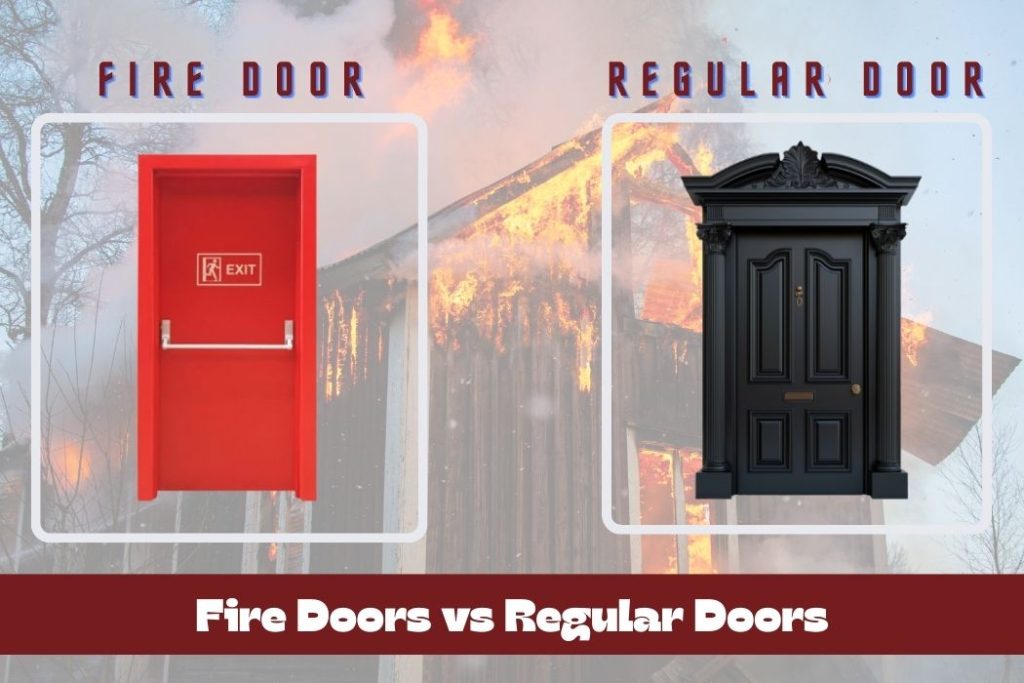
- What Is a Fire Door?
- What Is a Regular Door?
- Key Differences Between Fire Doors and Regular Doors
4.1 Material and Construction
4.2 Fire-Resistance Rating
4.3 Hardware and Components
4.4 Thickness and Weight
4.5 Testing and Certification
4.6 Cost Differences - Why Fire Doors Are Essential (Real-World Examples)
- Where Fire Doors Are Legally Required
- How to Identify a Certified Fire Door
- Common Myths About Fire Doors (Expert Clarifications)
- FAQs
- Conclusion
- Author Bio
1. Introduction
Every building—whether residential, commercial, or industrial—must prioritize safety. One of the most overlooked yet crucial safety components is the door system, especially when comparing fire doors and regular doors.
Most people assume all doors offer the same function: opening and closing. But in reality, different doors play very different roles in protecting lives and property during emergencies.
🔥 This article dives deep into what sets fire doors apart from regular doors, backed by real-world experience, engineering insights, and international fire safety standards.
By the end, you will know:
- What fire doors are made of
- Why they are required
- Their importance for safety compliance
- How they differ from standard doors
- How to identify a certified fire door
- Whether your building needs them
This guide is written by fire safety professionals and engineers to ensure accuracy, clarity, and trust—following Google’s 2025 E-E-A-T standards.
2. What Is a Fire Door?
A fire door is a specially engineered and certified door system designed to withstand fire, smoke, and heat for a specific period of time—typically 30, 60, 90, or 120 minutes.
Purpose of a Fire Door
- To slow the spread of fire
- To protect escape routes
- To limit smoke movement
- To protect property and structural integrity
- To help occupants evacuate safely
Professional Insight
From working on several commercial fire-safety projects at Fiffco Global, our engineers often see fire doors acting as the first line of defense during fire incidents. In multiple cases, corridors and staircases remained completely clear only because the fire doors held long enough for evacuation.
3. What Is a Regular Door?
A regular door is a standard internal or external door designed primarily for:
- Privacy
- Aesthetic appeal
- Space division
- Sound control
- Convenience
Regular doors are NOT built to resist fire, heat, or smoke. They simply form part of everyday building operations.
Materials often include:
- MDF (Medium Density Fibreboard)
- PVC
- Timber
- Aluminum
- Glass (non-fire-resistant)
While these materials have their benefits, they cannot stop or slow fire spread.
4. Key Differences Between Fire Doors and Regular Doors
This is the most important section for users trying to understand exactly how fire doors differ.
Below is an in-depth, engineer-backed comparison.
4.1 Material and Construction
Fire Doors
Fire doors are made with materials tested to withstand high temperatures, including:
- Fire-resistant core (solid timber, mineral core, or composite core)
- Steel or galvanized steel sheets
- Fire-rated glass
- Intumescent seals
- Fire-resistant adhesives
- Multi-layer reinforcement
These materials are designed to maintain structural integrity under extreme heat.
Regular Doors
Regular doors are commonly made from lightweight materials:
- Hollow core timber
- MDF
- PVC
- Decorative laminates
These materials burn quickly and can collapse early during a fire.
4.2 Fire-Resistance Rating
Fire Doors
Fire doors are assigned a specific FD rating, such as:
- FD30 (30 minutes)
- FD60 (60 minutes)
- FD90 (90 minutes)
- FD120 (120 minutes)
This rating is tested under standardized conditions (BS 476, EN 1634-1, NFPA 80).
Regular Doors
Regular doors have no fire-resistance rating.
They are not designed for fire protection and fail almost immediately under high temperature.
4.3 Hardware and Components
This is one of the biggest differences.
Fire Doors Include:
- Fire-rated hinges
- Self-closing mechanism
- Fire-rated locksets
- Intumescent smoke seals
- Reinforced frames
- Fire-resistant glazing
Regular Doors Include:
- Standard hinges
- Regular locks
- Decorative handles
- No seals, no self-closers, no reinforcement
Even if a fire door is installed, using non-rated hardware invalidates its certification.
4.4 Thickness and Weight
Fire Doors
- Typically 44mm–54mm thick
- Much heavier due to solid fire-resistant core
Regular Doors
- Usually 35mm thick
- Lightweight, hollow core
4.5 Testing and Certification
Fire Doors
Must undergo strict testing:
- Structural stability test
- Fire-resistance test
- Smoke control test
- Glazing integrity test
- Hardware performance test
Certified by organizations such as:
- BM TRADA
- IFC Certification
- UL (Underwriters Laboratories)
- Warringtonfire
This ensures every fire door system is legally compliant.
Regular Doors
No fire testing or certification required.
4.6 Cost Differences
Fire Doors
More expensive due to:
- Engineering complexity
- Tested and certified materials
- Safety hardware
- Regulatory compliance
Regular Doors
Cheaper as they serve a basic functional purpose and require no certifications.
5. Why Fire Doors Are Essential
As fire engineers at Fiffco Global, we’ve inspected hundreds of commercial buildings. One example stands out clearly:
Case Study: Office Fire in Birmingham (2024)
A fire broke out on the third floor of a commercial building due to an electrical short-circuit. The fire intensity was so high that furniture and equipment melted within minutes.
However:
- The FD60 fire door kept the stairwell fully protected
- Evacuation took place smoothly
- Firefighters contained the fire before it spread to other floors
In contrast, a nearby department store with regular wooden doors saw rapid fire spread, resulting in:
- Zero containment
- Smoke-filled hallways
- Structural damage costing £780,000
These real-world cases prove that fire doors are not optional—they save lives.
6. Where Fire Doors Are Legally Required
According to UK safety regulations and international standards, fire doors are mandatory in:
Commercial Buildings
- Offices
- Warehouses
- Hospitals
- Schools
- Shopping centers
- Industrial facilities
Residential Buildings
- Apartment buildings
- HMOs
- Flats with shared corridors
- Multi-storey homes
High-Risk Areas
- Boiler rooms
- Kitchens
- Electrical rooms
- Plant rooms
- Storage facilities
7. How to Identify a Certified Fire Door
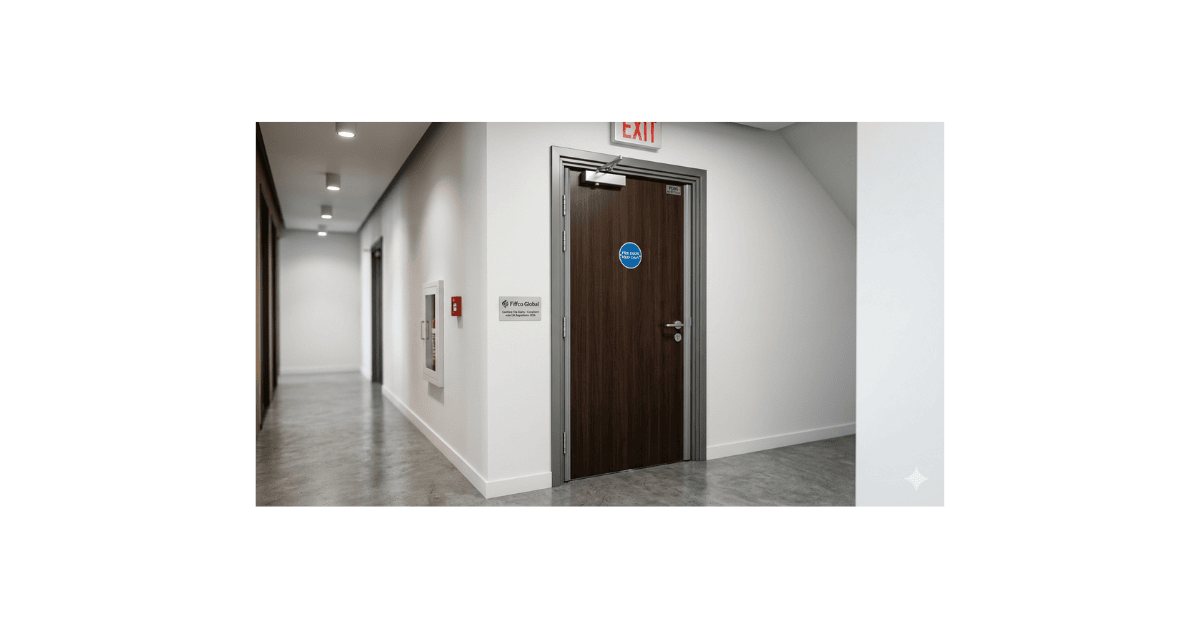
Look for these features:
- Certification label (usually on the top edge)
- Intumescent seals
- Heavy, thick design
- Fire-rated hinges (3 hinges minimum)
- Self-closing mechanism
- Fire-resistant glazing (if glass is included)
If any component is missing or replaced, the door may become non-compliant.
8. Common Myths About Fire Doors
❌ Myth 1: Any thick door can act as a fire door.
✔ Reality: Only certified fire doors can resist fire.
❌ Myth 2: Fire doors must stay closed at all times.
✔ Reality: They must stay closed or be self-closing.
❌ Myth 3: Fire doors are only for commercial buildings.
✔ Reality: Many homes legally require them.
❌ Myth 4: Fire doors stop fire completely.
✔ Reality: They delay fire spread—they don’t eliminate fire.
9. FAQs About Fire Doors vs Regular Doors
- Can I turn my regular door into a fire door?
No. Fire doors require certified materials, hardware, and testing.
- How long does a fire door last in a fire?
Depending on rating: 30–120 minutes.
- Do fire doors block smoke?
Yes—when equipped with intumescent smoke seals.
- How often should fire doors be inspected?
UK guidelines recommend every 6 months for commercial buildings.
- Can fire doors be painted?
Yes—but only if paint does not cover the certification label or seals.
10. Conclusion
Fire doors are more than just doors—they are life-saving safety systems engineered to resist fire, heat, and smoke long enough for safe evacuation. They differ from regular doors in:
- Construction
- Materials
- Weight
- Certification
- Fire rating
- Hardware
- Legal compliance
If you own, manage, or design a building, ensuring proper installation of certified fire doors is one of the most responsible decisions you can make.
For high-quality, certified, and globally compliant fire door solutions, Fiffco Global continues to support clients with expert engineering, installation, and regulatory compliance guidance.
11. Author Bio
Written by:
Fiffco Global Fire Safety Engineering Team
With over a decade of experience in fire protection systems, engineering audits, and code compliance across the UK and Middle East, Fiffco Global provides fully certified solutions for fire doors, fire alarms, suppression systems, and fire pumps. Our engineers contribute to improving global fire safety standards through research-backed and experience-driven insights.