









Published: October 30, 2025
Author: Fiffco Global Fire Safety Team
Website: Fiffco Global
Table of Contents
- Introduction: Why Gate Valves Matter
- What Is a Fire Fighting Gate Valve?
- Key Functions in Fire Protection Systems
- Types of Gate Valves Used in Fire Safety
- Real-World Applications & Case Studies
- Benefits of Using Gate Valves
- Common FAQs About Fire Fighting Gate Valves
- Expert Tips for Selection & Maintenance
- Conclusion & Takeaways
- About the Author
1. Introduction: Why Gate Valves Matter
Fire protection systems are only as reliable as their weakest component. In high-stakes emergencies, every second counts—and so does every valve. Fire fighting gate valves are the unsung heroes of fire suppression infrastructure, quietly ensuring water flows where and when it’s needed most.
This guide explores the critical role gate valves play in fire protection systems, offering insights into their functions, types, benefits, and expert advice for selection and maintenance. Whether you’re a facility manager, safety engineer, or curious homeowner, this article will equip you with the knowledge to make informed decisions.
2. What Is a Fire Fighting Gate Valve?
A gate valve is a type of shut-off valve that controls water flow by lifting or lowering a gate inside the valve body. In fire protection systems, gate valves are used to isolate sections of piping, control water supply, and enable maintenance without disrupting the entire system.
Key Characteristics:
- Operates via a handwheel or actuator
- Designed for full open or full close positions
- Minimal pressure drop when fully open
- Typically installed in fire hydrant lines, sprinkler systems, and water mains
3. Key Functions in Fire Protection Systems
Gate valves serve several vital functions in fire safety infrastructure:
- Isolation for Maintenance: Allows technicians to shut off specific zones without affecting the whole system
- Flow Control: Ensures water reaches the correct suppression points during an emergency
- System Integrity: Prevents backflow and water hammer, protecting equipment
- Emergency Shut-Off: Quickly halts water supply post-fire to prevent flooding or damage
4. Types of Gate Valves Used in Fire Safety
Understanding the different types helps ensure the right valve is selected for the right application.
Common Types:
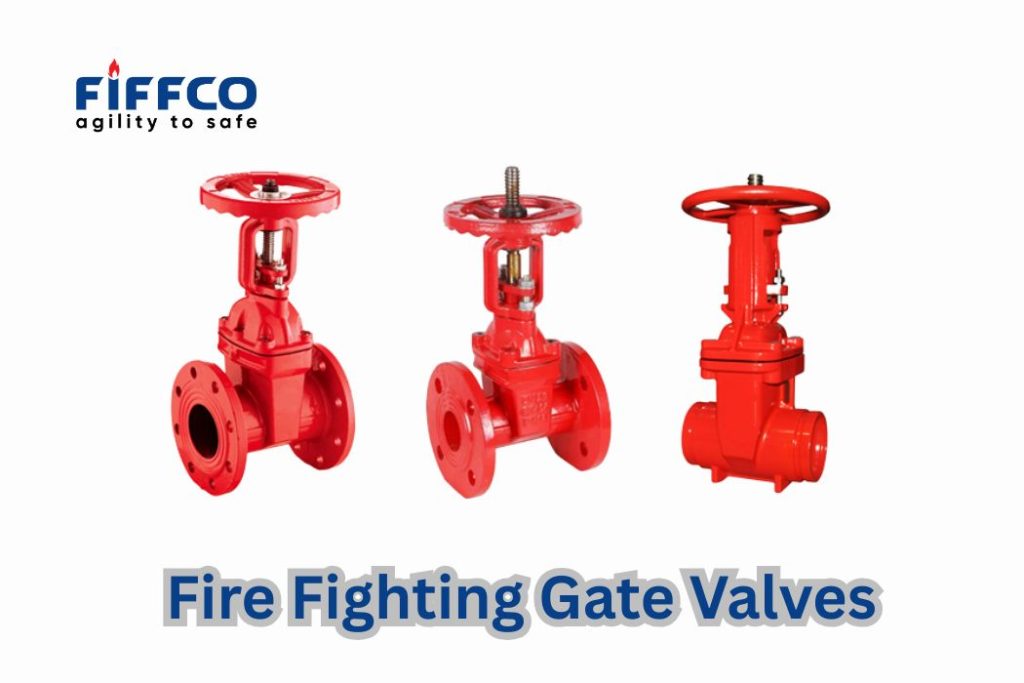
- Rising Stem Gate Valve: Stem visibly moves up/down; ideal for visual inspection
- Non-Rising Stem Gate Valve: Stem stays in place; suitable for underground installations
- OS&Y (Outside Screw & Yoke): Offers clear open/close indication; often used in fire sprinkler systems
- Resilient Seated Gate Valve: Provides tight seal; corrosion-resistant and low maintenance
Each type has its own advantages depending on the installation environment and operational needs.
5. Real-World Applications & Case Studies
At Fiffco Global, we’ve seen firsthand how gate valves make a difference. In one industrial facility, a non-rising stem gate valve allowed underground fire mains to be isolated for repair without disrupting operations. In another case, an OS&Y valve helped firefighters quickly identify open lines during a warehouse blaze, saving critical time.
These examples underscore the practical importance of choosing the right valve for your fire protection system.
6. Benefits of Using Gate Valves
Gate valves offer several advantages that make them indispensable in fire safety:
- Reliable Shut-Off: Prevents water damage post-fire
- Durability: Long-lasting with minimal maintenance
- Energy Efficiency: Low pressure drop reduces pumping costs
- Compliance: Meets NFPA and local fire code standards
- Peace of Mind: Enhances overall system reliability
7. Common FAQs About Fire Fighting Gate Valves
Q: Can gate valves be used in sprinkler systems? Yes. OS&Y gate valves are commonly used to control water flow in sprinkler systems.
Q: How often should gate valves be inspected? At least annually, or as recommended by local fire codes and NFPA standards.
Q: What’s the difference between gate and butterfly valves? Gate valves offer better shut-off capabilities and are preferred in fire systems for their reliability.
Q: Are gate valves suitable for underground use? Yes, especially non-rising stem gate valves due to their compact design.
8. Expert Tips for Selection & Maintenance
Selection Tips:
- Assess Environment: Underground vs. above-ground installation
- Check Compliance: Ensure valves meet local fire codes
- Material Matters: Choose corrosion-resistant materials like ductile iron or bronze
Maintenance Tips:
- Exercise Valves Regularly: Prevents seizing
- Inspect for Leaks: Especially after fire events
- Document Maintenance: For compliance and insurance purposes
9. Conclusion & Takeaways
Fire fighting gate valves are foundational to any robust fire protection system. They ensure water flows where needed, isolate zones for maintenance, and provide reliable shut-off during emergencies. Choosing the right valve type, maintaining it properly, and understanding its role can make the difference between a controlled fire and a catastrophic loss.
Key Takeaways:
- Gate valves are essential for flow control and system integrity
- Different types suit different environments
- Regular maintenance ensures reliability
- Compliance with standards is non-negotiable
👉 Explore our full range of fire protection solutions at Fiffco Global
👉 Sign up for our newsletter for expert fire safety tips
👉 Leave a comment below with your fire protection questions
10. About the Author
Fiffco Global Fire Safety Team With over 20 years of experience in fire protection engineering, Fiffco Global is a trusted name in fire safety solutions across the UK and beyond. Our team includes certified fire safety professionals, engineers, and consultants dedicated to protecting lives and property.