





By FIFFCO Global Fire Safety Division
Last Updated: December 2025
Table of Contents
- Introduction
- What Is a Fire Hose Pipe? (Simple Definition)
- Why Fire Hose Pipes Matter in Modern Fire Safety
- Types of Fire Hose Pipes
- Attack Hose
- Supply Hose
- Suction Hose
- Forestry Hose
- Booster Hose
- Rack & Reel Hose
- Fire Hose Materials
- Rubber
- PVC
- Canvas / Single Jacket / Double Jacket
- EPDM
- Polyurethane (PU)
- Reinforced Nitrile
- Fire Hose Coupling Types
- Global Fire Hose Testing Standards
- NFPA
- BS (British Standards)
- EN (European Norms)
- ISO Standards
- UL/FM Certifications
- Pressure Testing Types
- How to Choose the Right Fire Hose Pipe
- Real-Life Example from Field Experience
- Maintenance & Inspection Checklist
- Frequently Asked Questions (FAQ)
- Final Thoughts & Call-to-Action
- Author Bio
1. Introduction: Why This Guide Matters
Fire hose pipes are among the most critical life-saving equipment in any fire-fighting system—yet most people don’t know which type to buy, how they work, or what standards they must meet.
In 2025, fire safety regulations worldwide have become stricter, and understanding fire hose materials, performance ratings, and maintenance standards is crucial for:
- building owners
- fire safety engineers
- facility managers
- industrial plants
- contractors
- safety inspectors
This guide will give you everything you need to know, written with real-world expertise from field engineers and compliance professionals at FIFFCO Global.
2. What Is a Fire Hose Pipe?
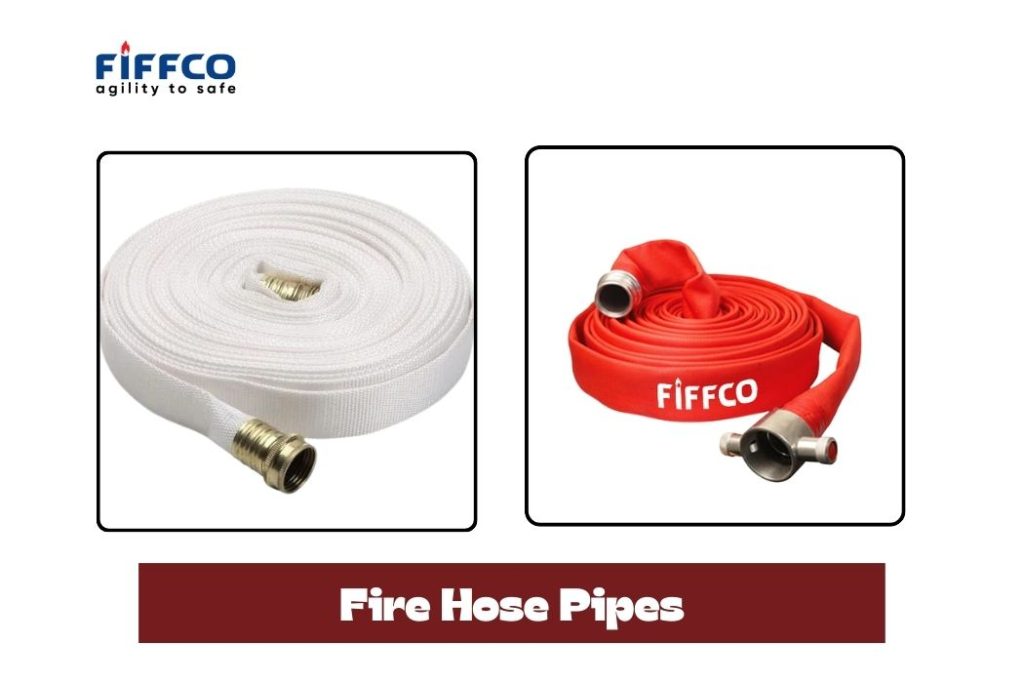
A fire hose pipe is a high-pressure flexible tube designed to deliver water, foam, or other fire-extinguishing agents to control and suppress fires.
They come in different diameters, materials, and pressure ratings, depending on the environment and fire hazard level.
3. Why Fire Hose Pipes Matter in Modern Fire Safety
Fire hoses are often the first line of defense before firefighters arrive. In commercial buildings, factories, warehouses, and refineries, the right fire hose pipe can:
- Prevent small fires from turning into major disasters
- Facilitate early intervention
- Ensure compliance with fire safety codes
- Reduce property damage
- Save lives
Poor-quality hoses can burst, leak, or fail under pressure—leading to catastrophic losses.
4. Types of Fire Hose Pipes (Explained with Real-World Use Cases)
Fire hose pipes are categorized based on their purpose, design, and pressure capacity.
4.1 Attack Hose (Primary Firefighting Hose)
Use: Direct fire attack by firefighters
Pressure Rating: High (up to 300–600 PSI)
Diameter: 1.5″ – 2.5″
Attack hoses must be flexible, heat-resistant, and durable. They are used inside buildings and by fire brigades.
4.2 Supply Hose (Large Diameter)
Use: Water supply from hydrants or pumps
Pressure Rating: Medium (150–300 PSI)
Diameter: 4″ – 6″
Also known as LDH (Large Diameter Hose), these hoses move huge volumes of water.
4.3 Suction Hose
Use: Drafting water from lakes, rivers, or tanks
Structure: Hard rubber with embedded wire
Diameter: 3″ – 6″
These hoses are rigid and cannot collapse during suction.
4.4 Forestry Hose
Use: Wildfires, forestry operations
Features: Lightweight, abrasion-resistant
Material: Single jacket polyester
Designed for areas where hoses must be carried long distances.
4.5 Booster Hose
Use: Vehicle-mounted reels
Features: Rubber-wrapped, rigid, small diameter
Ideal for rapid deployment.
4.6 Rack & Reel Hose
Use: Indoor fire cabinets (Fire Hose Reels)
Pressure Rating: Lower than attack hose
Material: Rubber-lined canvas
Commonly installed in malls, apartments, commercial buildings.
5. Fire Hose Pipe Materials
Choosing the right material impacts:
- durability
- pressure capacity
- flexibility
- resistance to chemicals, oil, and heat
Here are the main fire hose materials:
5.1 Rubber (Nitrile Rubber)
Pros:
✔ Heat-resistant
✔ Chemical-resistant
✔ Suitable for industrial applications
✔ Excellent durability
Used In: Booster hoses, attack hoses, industrial hoses.
5.2 PVC (Polyvinyl Chloride)
Pros: Affordable, lightweight
Cons: Low heat resistance
Best For: Domestic or light-duty use
5.3 Canvas (Single Jacket, Double Jacket)
Single Jacket: Cheaper, lightweight
Double Jacket: Stronger, higher pressure, longer lifespan
Commonly used for:
- building fire cabinets
- irrigation systems
- light industrial applications
5.4 EPDM Rubber
Excellent for:
- high-temperature zones
- chemical plants
- outdoor usage (UV-resistant)
5.5 Polyurethane (PU)
Pros:
✔ Lightweight
✔ Smooth interior for higher flow
✔ Excellent abrasion resistance
Popular in forestry and military applications.
5.6 Reinforced Nitrile Hose
A heavy-duty hose suitable for industrial and oil-and-gas environments.
Advantages:
✔ High pressure
✔ Bacteria-resistant
✔ Resistant to fuel and oils
6. Fire Hose Coupling Types
Couplings ensure compatibility between hose, hydrant, and nozzle.
Common standards:
- Storz Coupling (Germany & Europe)
- Instantaneous Coupling (UK Standard – BS 336)
- NST/NH (USA Standard)
- John Morris Coupling
- Lug Type / Camlock
Selecting the wrong coupling results in incompatibility and water loss, affecting emergency response.
7. Global Fire Hose Testing Standards
Fire hose pipes must undergo strict testing to ensure safety and performance.
7.1 NFPA Standards (USA)
- NFPA 1961: Fire Hose Requirements
- NFPA 1962: Hose Inspection, Testing & Replacement
Test Requirements Include:
✔ Burst test
✔ Service test
✔ Coupling retention test
✔ Kink test
7.2 British Standards (BS 6391)
3 Hose Grades:
- Type 1: Non-percolating (light)
- Type 2: Rubber-lined
- Type 3: Rubber-protected
Widely used in the UK, Middle East & Asia.
7.3 EN Standards (European Norm)
- EN 694 – Industrial hose
- EN 14540 – Rubber & plastic hoses
- EN 1924 – Fire-fighting hoses
7.4 ISO Standards
- ISO 16339 – Fire hose performance
- ISO 9001 – Manufacturing consistency
7.5 UL & FM Approvals
- UL (Underwriters Laboratories)
- FM Global (Factory Mutual)
These certifications indicate world-class reliability and are crucial for high-risk facilities like:
- refineries
- power plants
- factories
- pharmaceuticals
Types of Fire Hose Pressure Tests
| Test Type | Purpose |
| Service Test | Ensures hose can handle rated working pressure |
| Burst Test | Tests maximum pressure before failure |
| Proof Test | Confirms structural stability |
| Kink Test | Ensures hose stays functional even when bent |
8. How to Choose the Right Fire Hose Pipe
Here are expert recommendations used by FIFFCO Global engineers:
✔ Identify Your Fire Hazard Level
- Residential
- Industrial
- Commercial
- Oil & gas
- Chemical plants
Each environment requires specialized materials.
✔ Check Pressure Rating
Higher pressure = better durability and safety.
✔ Choose Correct Couplings
Ensure compatibility with existing hydrants.
✔ Verify Certifications
Look for:
NFPA | UL | FM | BS | EN | ISO
✔ Material Selection
- For industrial: Nitrile, rubber
- For buildings: double jacket canvas
- For outdoor: PU, EPDM
✔ Ease of Handling
Lightweight hoses are essential for emergency responders.
9. Real-Life Experience: Why Standards Matter (Engineer’s Note)
During a factory inspection in early 2024, our FIFFCO Global team discovered that several fire hoses had expired service test dates and showed internal delamination.
During a pressure test, one hose burst at only 70% of its rated pressure, which would have completely failed in a real emergency.
This incident highlights the importance of:
- yearly testing
- choosing certified hoses
- proper storage
Such real-world experiences shape our strict product recommendations.
10. Maintenance & Inspection Checklist
Perform this every 6–12 months:
- Inspect for cuts, molds, abrasions
- Ensure couplings are tight
- Check gasket seals
- Conduct pressure tests
- Verify service dates
- Store in cool, dry places
- Avoid direct sunlight
11. Frequently Asked Questions (FAQ)
1. How long does a fire hose last?
Typically 10–15 years, depending on usage and maintenance.
2. Can fire hoses expire?
Yes. They must be service-tested annually.
3. What is the best material for fire hoses?
For buildings → Double jacket canvas
For industries → Nitrile rubber
For outdoor → PU / EPDM
4. Can I use a fire hose at home?
Light-duty PVC hoses can be used but not recommended for serious fire hazards.
5. What is the maximum pressure of a fire hose?
Ranges between 300–800 PSI, depending on type.
12. Conclusion: Final Thoughts
Fire hose pipes are a crucial component of fire protection systems. Understanding their types, materials, and global standards ensures:
- better safety
- system reliability
- regulatory compliance
- faster emergency response
Whether you manage a building, factory, or industrial facility, selecting certified fire hoses can protect lives and property.
13. About the Author
This guide is written by the Fire Safety Engineering Team at FIFFCO Global, with over 15 years of field experience in:
- fire protection system installation
- pump & hose testing
- global fire code compliance
- industrial fire safety audits
FIFFCO Global supplies UL/FM certified fire safety products across the UK, Middle East, Europe, and Asia.
 Book a Consultation: https://fiffco.co.uk/
 Email: info@fiffco.co.uk
Your safety deserves nothing less.