


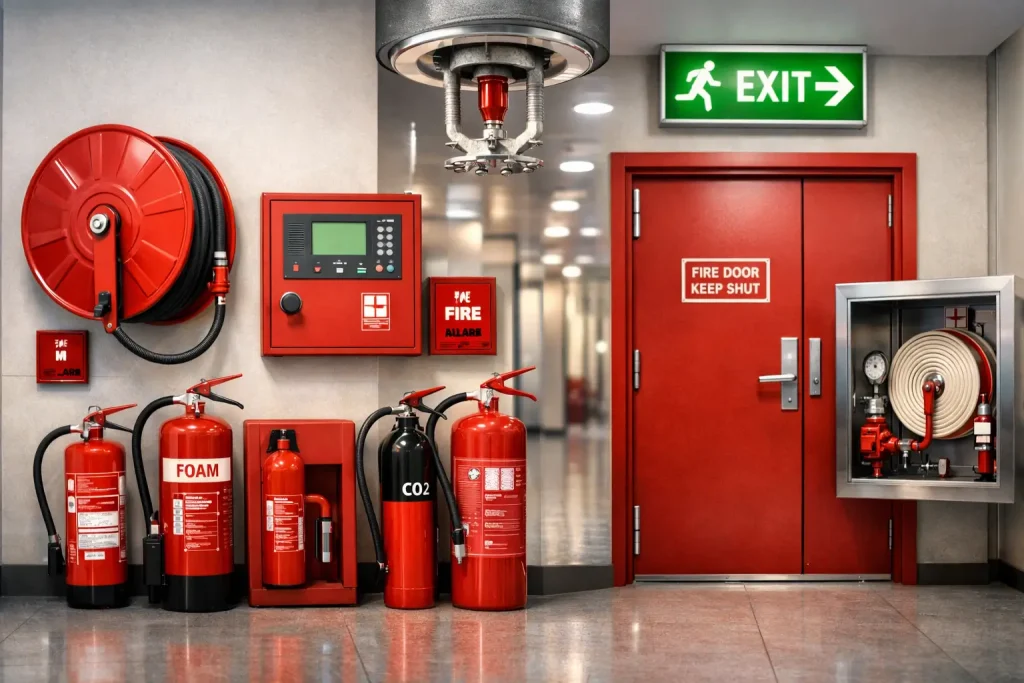
Fire safety is a fundamental requirement for every modern workplace. Commercial buildings such as offices, factories, warehouses, shopping malls, and healthcare facilities face increased fire risks due to electrical systems, machinery, and high human occupancy.
This complete guide to fire-fighting equipment for commercial buildings explains the essential systems, how they work together, and how they help protect lives, assets, and uninterrupted business operations.
Why Fire Fighting Equipment Is Essential in Commercial Buildings
A fire emergency can escalate within minutes, resulting in injuries, property damage, and operational shutdowns. That is why commercial properties must implement comprehensive fire protection systems that focus on prevention, early detection, suppression, and safe evacuation.
Key Reasons Fire Fighting Equipment Is Critical
- Enables early fire detection and control
- Ensures safe evacuation of occupants
- Minimizes damage to property and assets
- Supports compliance with fire safety regulations
- Protects long-term business continuity
Understanding Fire Risks and Fire Classes
Selecting the correct firefighting equipment depends on understanding the type of fire risk present within a building.
Common Fire Classes in Commercial Buildings
- Class A: Paper, wood, furniture
- Class B: Flammable liquids and chemicals
- Class C: Electrical equipment
- Class D: Combustible metals
- Class K: Cooking oils and fats
Each class requires a specific fire control approach to ensure safety.
Types of Fire Fighting Equipment for Commercial Buildings
Fire protection systems in commercial buildings generally fall into four categories:
- Portable firefighting equipment
- Fixed fire suppression systems
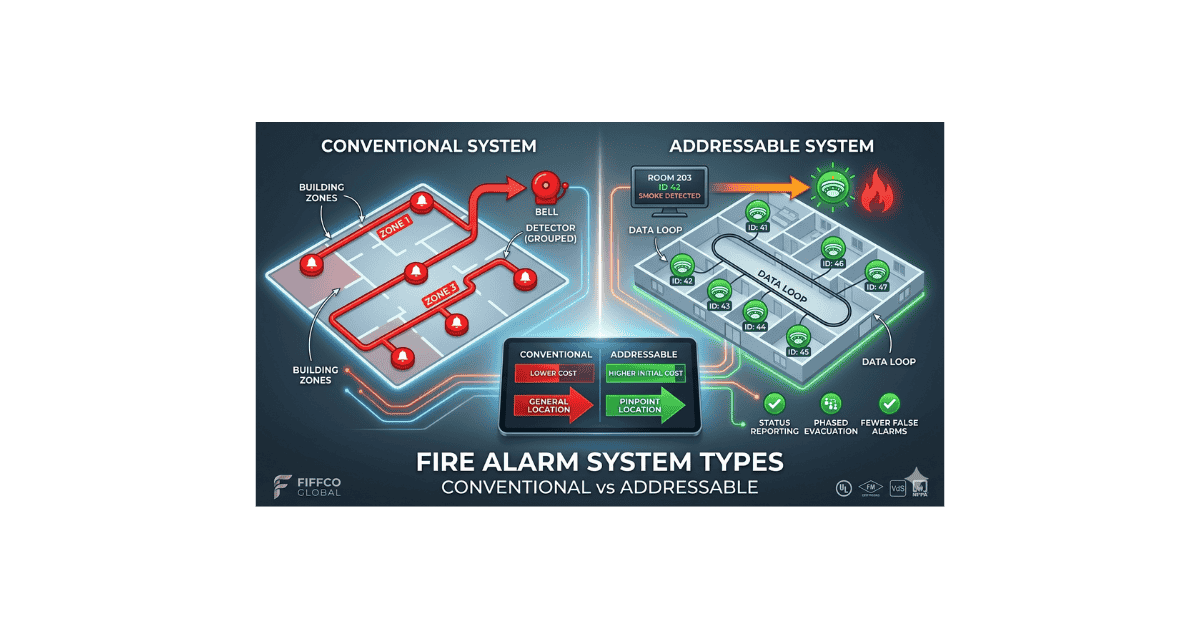
- Fire detection and alarm systems
- Life safety and evacuation systems
Fire Extinguishers: The First Line of Defense
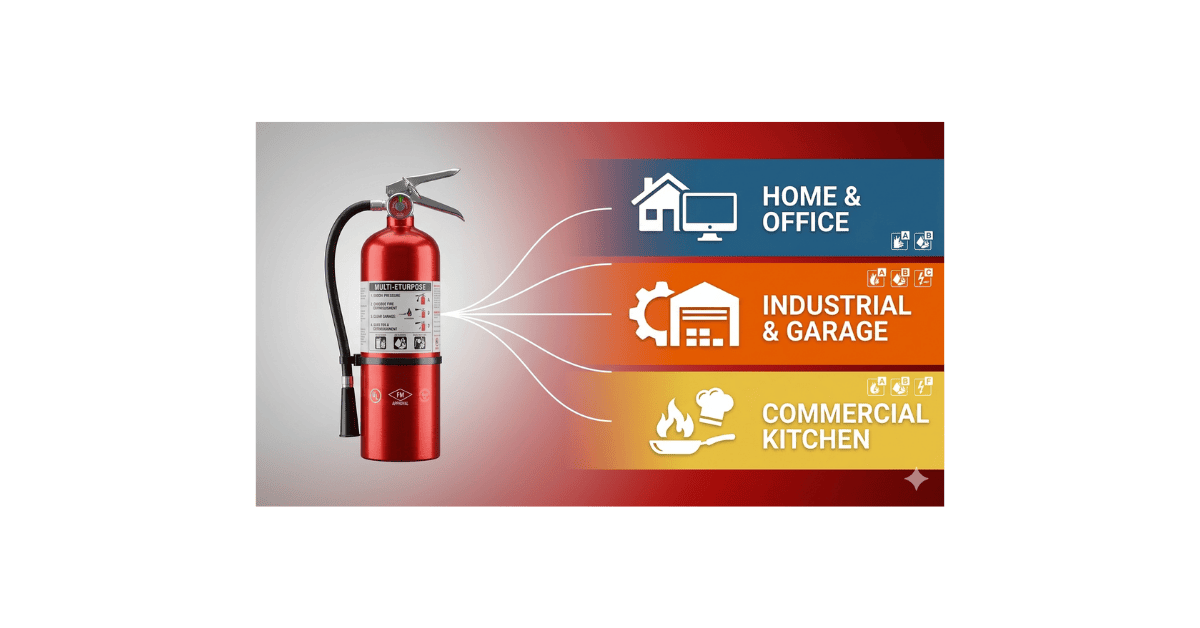
Fire extinguishers are the most common and accessible firefighting equipment in commercial buildings. They are designed to control small fires before they spread.
Common Fire Extinguisher Types
- Water extinguishers for Class A fires
- Foam extinguishers for flammable liquids
- CO₂ extinguishers for electrical fires
- Dry powder (ABC) extinguishers for multi-risk areas
Proper placement, signage, and staff training are essential for effective use.
Fire Hose Reels and Hydrant Systems
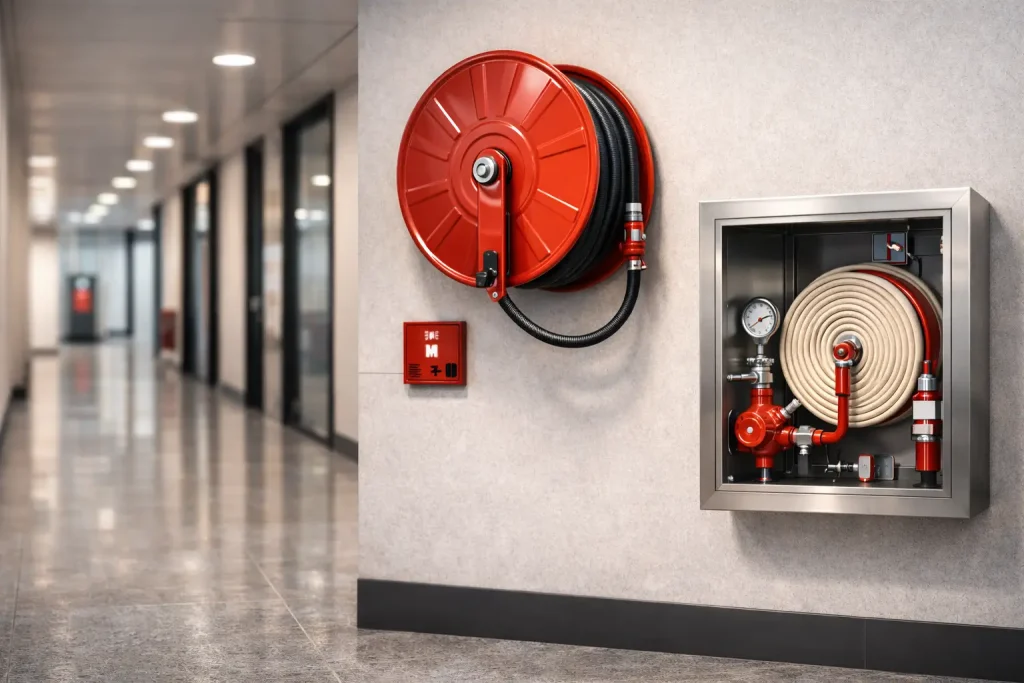
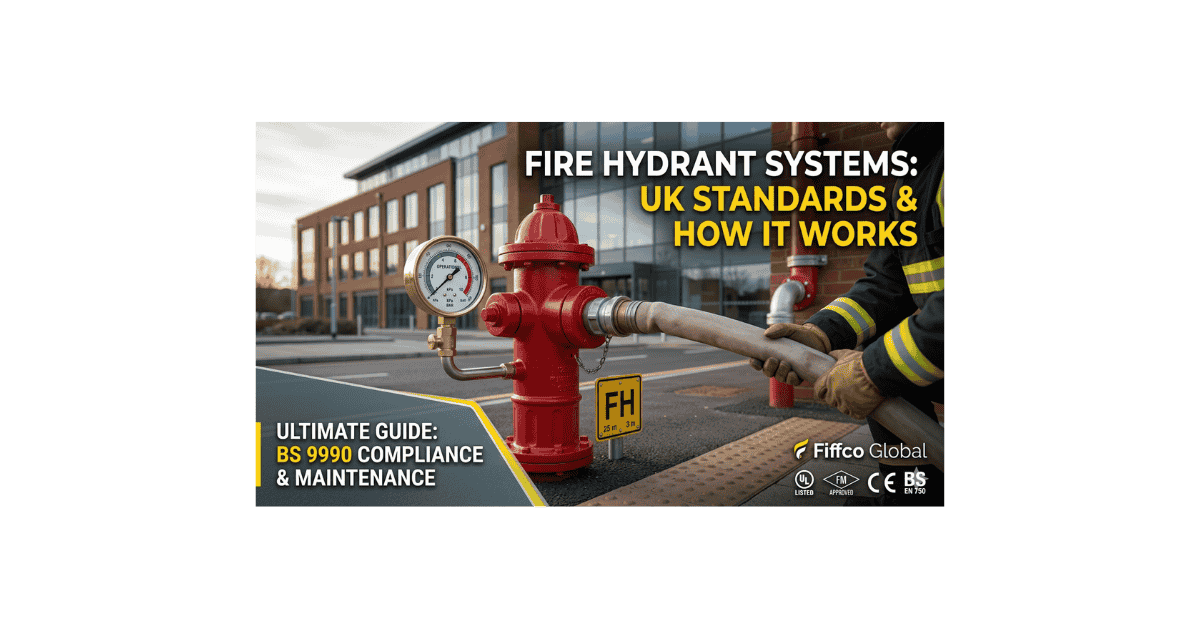
When a fire exceeds the capacity of extinguishers, fire hose reels, and hydrant systems provide a continuous, powerful water supply.
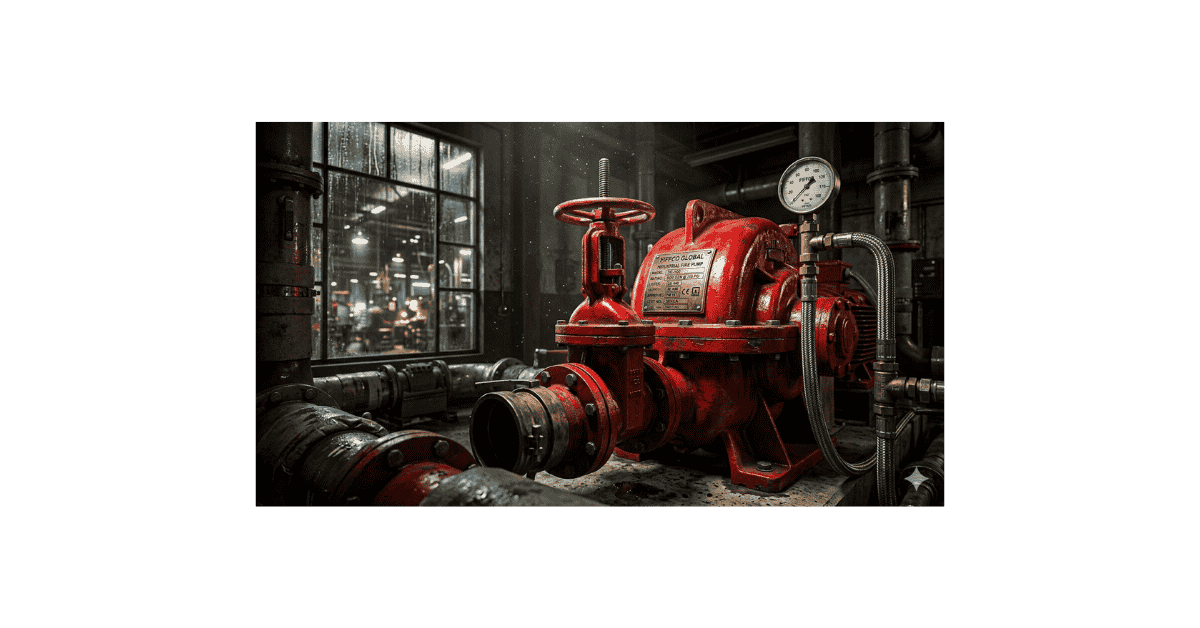
These systems rely heavily on fire pumps. Issues such as pressure failure or pump malfunction can render hydrants ineffective. Facility managers should understand
common fire pump problems and how to fix them fast
to ensure uninterrupted fire protection.
Automatic Fire Sprinkler Systems
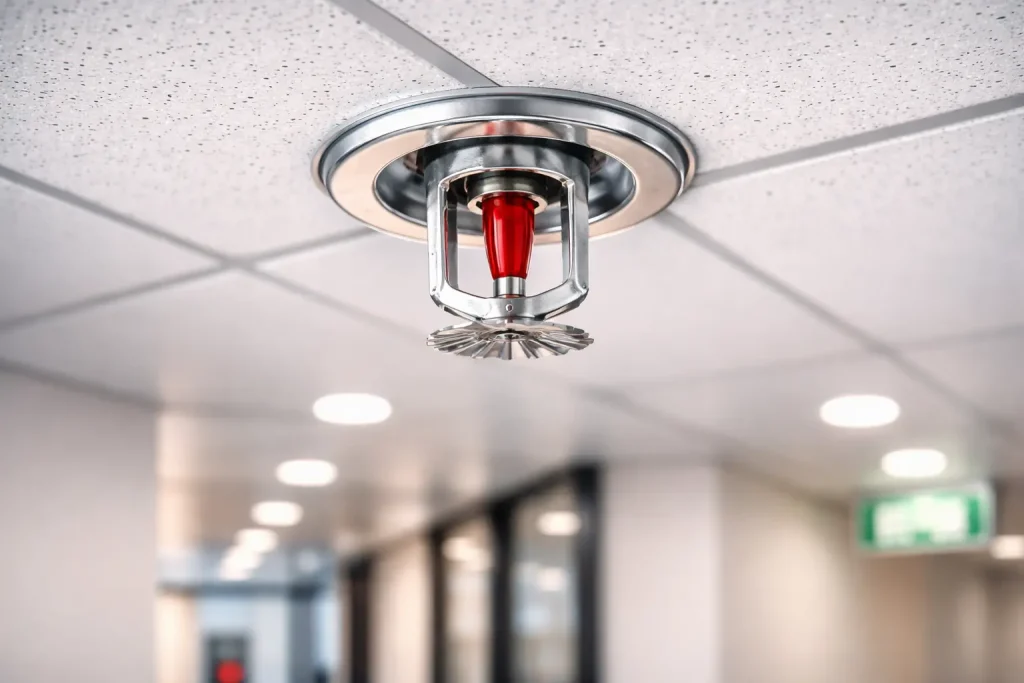
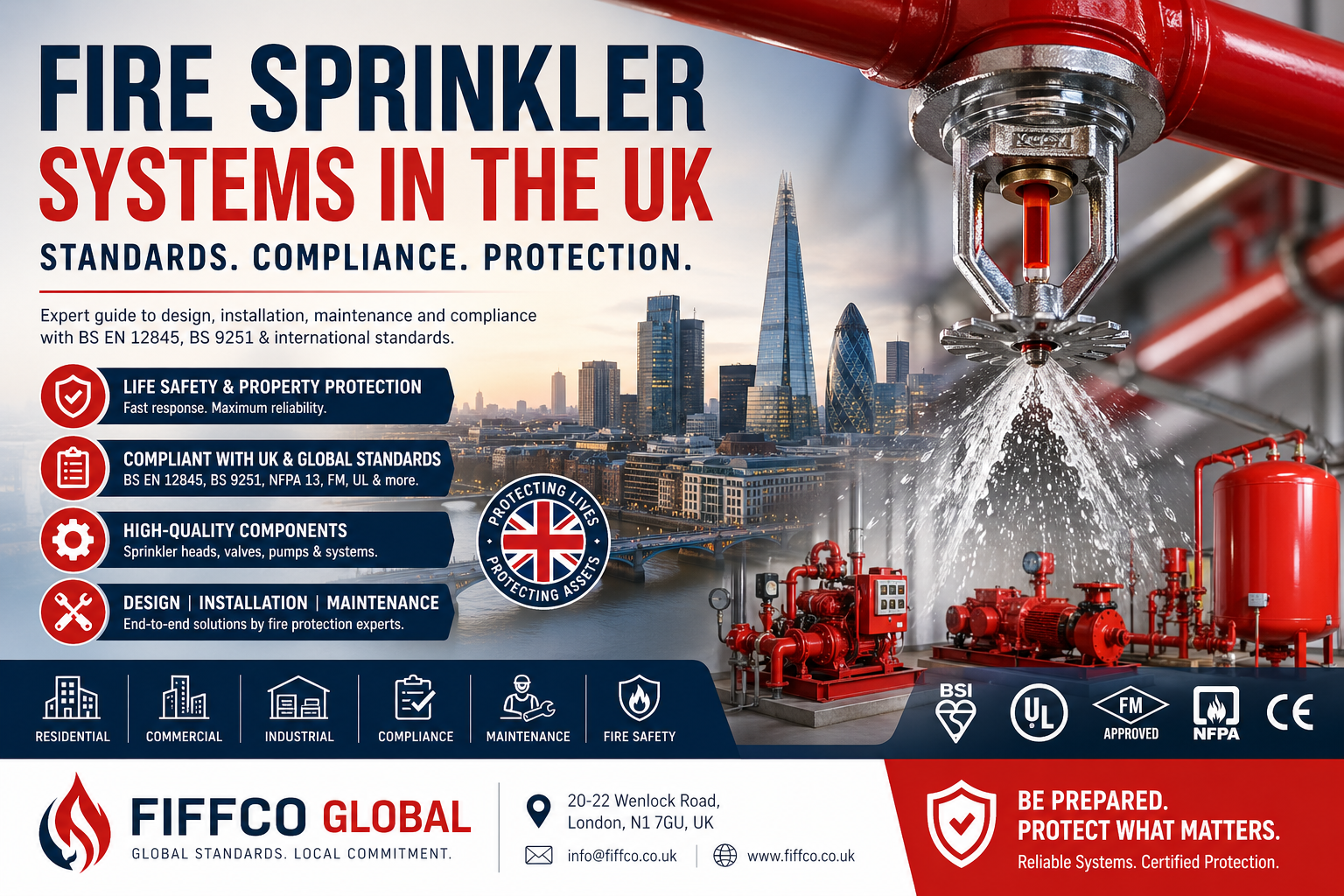
Automatic sprinkler systems are among the most effective firefighting solutions for commercial buildings.
How Sprinkler Systems Work
- Activate automatically when the heat reaches a preset level
- Operate individually to control fire at its source
- Reduce fire spread and structural damage
Choosing the Right Suppression Method
Not all buildings require the same type of sprinkler system. Some environments benefit from water-based protection, while others require foam systems. A detailed explanation is available in this
water vs foam fire systems comparison guide
for commercial buildings.
Fire Detection and Alarm Systems
Fire detection and alarm systems provide early warning, allowing occupants to evacuate safely before conditions become dangerous.
Key Components
- Smoke and heat detectors
- Manual call points
- Audible and visual alarm devices
- Fire alarm control panels
Early detection significantly reduces injury and fatality risks.
Fire Suppression Systems for Sensitive Areas
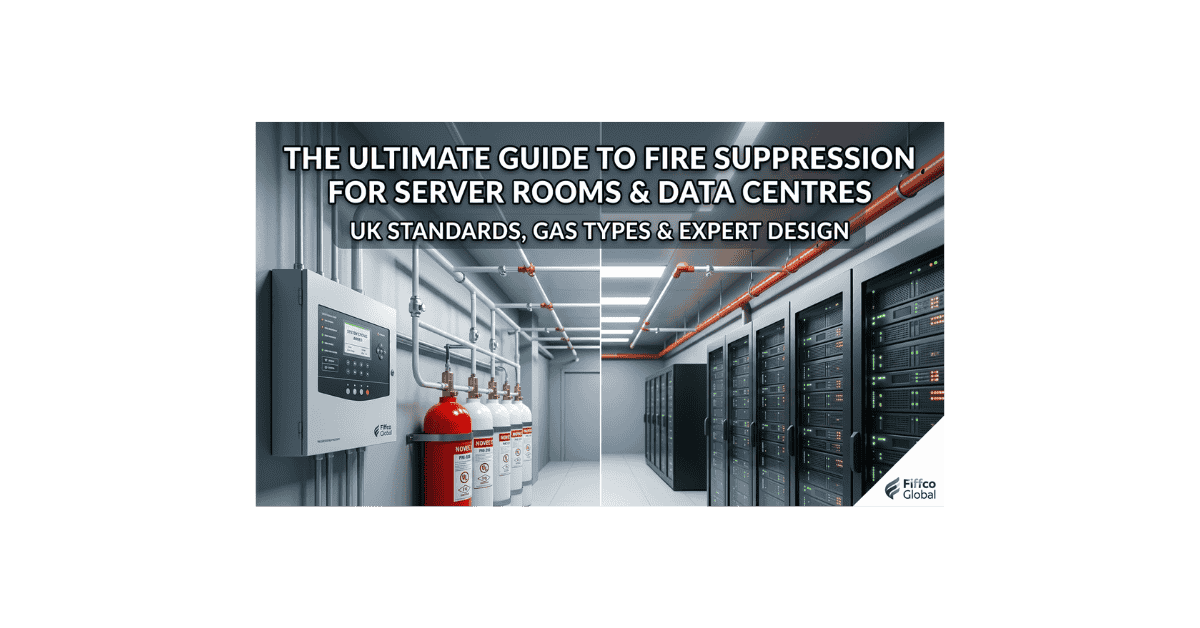
Certain areas, such as data centers, electrical rooms, and control facilities, require fire suppression systems that do not rely on water.
When selecting suppression agents, environmental and health impacts must be considered. Ongoing concerns about
PFAS chemicals are used in some fire suppression systems
have increased demand for safer alternatives.
Fire Doors and Passive Fire Protection
Passive fire protection systems slow the spread of fire and smoke, providing valuable time for evacuation.
Why Fire Doors Are Essential
- Compartmentalize fire zones
- Protect escape routes
- Improve overall building safety
Understanding the
Key differences between fire doors and regular doors
helps building owners choose compliant and effective solutions.
Emergency Lighting and Exit Signage
During fire emergencies, power failures are common. Emergency lighting and exit signage ensure visibility and guide occupants toward safe exits.
Importance of Emergency Lighting
- Guides occupants during evacuation
- Reduces panic and confusion
- Required under fire safety regulations
Fire Safety Maintenance and Inspection
Fire-fighting equipment must be regularly inspected and maintained to function effectively during emergencies.
Best Maintenance Practices
- Monthly fire extinguisher inspections
- Quarterly fire alarm testing
- Annual sprinkler and hydrant system checks
- Routine fire drills and staff training
Independent certification bodies such as
UL fire safety standards and product testing
help ensure equipment reliability and compliance.
Professional Fire Safety Support and Compliance
Commercial buildings must comply with local and international fire safety standards. Working with experienced fire protection specialists ensures systems are correctly designed, installed, and maintained.
For complete commercial fire protection solutions, inspections, and expert guidance, visit
FIFFCO’s commercial fire safety services.
Final Conclusion
Fire-fighting equipment is a critical investment for commercial buildings. From fire extinguishers and hydrant systems to advanced suppression, alarms, and passive protection, each component plays a vital role in safeguarding lives and property.
A well-planned, properly maintained fire safety strategy ensures compliance, reduces risk, and creates a safer environment for employees, visitors, and assets.